
When Living Spaces Shrink: Efforts to Maintain Harmony Between People and Elephants in South Sumatra
admin
August 20, 2026
News
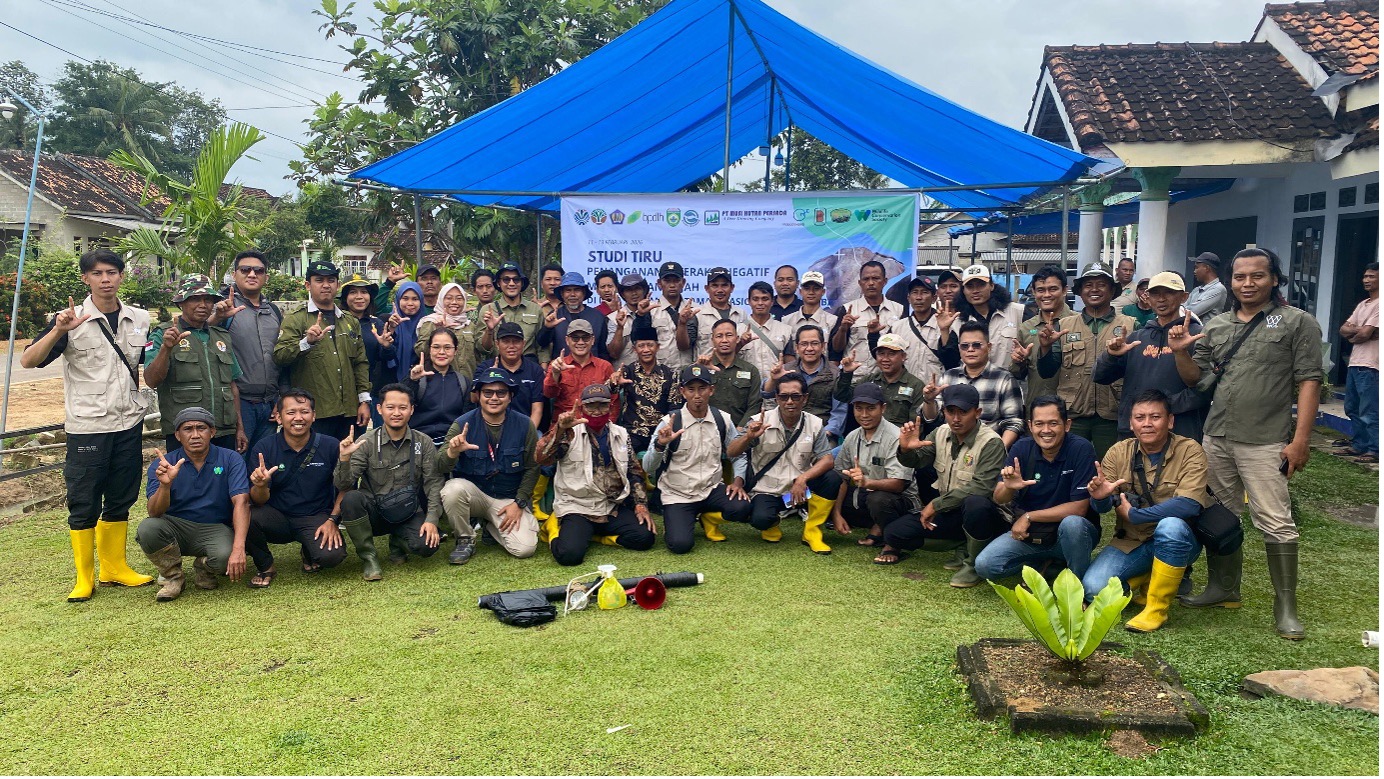
As living spaces grow increasingly limited, collaboration is key to rebuilding shared spaces for people and Sumatran elephants.
The death of a resident in Musi Rawas in 2024 following an encounter with a wild elephant served as a stark reminder that the boundaries between human settlements and wildlife habitats in South Sumatra are becoming increasingly blurred. The tragic death of Karsini (34), a resident of Tri Anggun Jaya Village, not only left a community in mourning but also underscored that human–wildlife conflict has become a very real threat.
South Sumatra is known as an important habitat for several protected wildlife species, including the Sumatran Elephant, Sumatran Tiger, and Malayan Sun Bear. However, increasing pressure on their habitats continues to threaten their survival. Deforestation, land-use change, forest fires, settlement expansion, and the impacts of climate change have all reduced the space available to wildlife. As habitat quality declines, animals—particularly elephants—are increasingly forced to venture beyond their natural ranges.
One of the important Sumatran Elephant habitat pockets in the province lies within the Benakat–Semangus landscape, which stretches across several districts, including Musi Banyuasin, Musi Rawas, Lahat, Muara Enim, and Penukal Abab Lematang Ilir (PALI). The area serves as an important elephant movement corridor, while also becoming increasingly vulnerable to human–elephant conflict.
Declining habitat quality directly affects elephant ranging patterns. As food resources in the forest become increasingly limited, community plantations and agricultural lands become an unavoidable alternative. As a result, interactions that were once sporadic have increasingly developed into recurring conflicts. In addition to causing fatalities, these incidents also inflict economic losses on local communities through damage to crops and agricultural land.
This situation has encouraged various stakeholders—including local governments, area managers, private-sector actors, local communities, and conservation organizations—to move beyond working in isolation. Collaboration is essential to developing solutions that are not merely reactive, but also sustainable in the long term.
One concrete step has been to learn from good practices in Rantau Jaya Udik II Village, Sukadana Subdistrict, East Lampung Regency, which borders Way Kambas National Park in Lampung—a region that has long experienced the dynamics of human–elephant conflict. Through a study visit conducted in February 2026, stakeholders from South Sumatra had the opportunity to observe firsthand how communities living around the conservation area have developed mitigation strategies, ranging from elephant deterrence systems to early-warning mechanisms.
The activity was part of a collaborative, multi-stakeholder initiative initiated by the South Sumatra Provincial Forestry Agency, with funding support from Yayasan Relung Indonesia through the RBP REDD+ For Result Period 2014–2016 GCF Output 2, Category II Utilization Project. The initiative was further strengthened through the involvement of development partners and private-sector companies holding PBPH and PPKH permits, namely PT Musi Hutan Persada, PT Medco E&P Indonesia, PT Pertamina Hulu Rokan Regional Sumatra Zone 4, and PT Bara Sumatera Energy. Their involvement demonstrates that addressing human–wildlife conflict requires coordinated action across sectors and stakeholders.
The involvement of village communities is also a crucial part of this process, as they are both the most directly affected and the frontline actors dealing with conflict on the ground. Through this learning process, several key actions emerged: building awareness that elephants need sufficient space to live, strengthening early-warning systems so communities can anticipate elephant movements, and mapping elephant movement routes as a basis for more effective mitigation. Above all, collaboration among stakeholders remains a decisive factor in achieving lasting results.
These efforts did not end with the study visit. As a follow-up, the South Sumatra Provincial Forestry Agency, supported by regional government funding, has begun promoting the establishment of Independent Village Communities for Conflict Management (Masyarakat Desa Mandiri Konflik) in Bumi Makmur Village and Tri Anggun Jaya Village. The initiative aims to ensure that the knowledge and experience gained through the learning process can be translated into practical action at the local level.
Ultimately, maintaining harmony between people and wildlife is far from simple. It is a long-term process that requires commitment, understanding, and collaboration across stakeholders. Without sufficient space for wildlife, conflicts will continue to recur. But with strong collaboration, the hope of peaceful coexistence between people and elephants remains within reach.
Contributor:
Ahmad Rifa’i
“Dynamic Harmony between Human and Nature.”
-Relung Indonesia
Tags :
News
Share This :
Category
- Ecosystem Restoration
- Biodiversity and Wildlife Conservation
- Community Ecological Education
- Digital Climate Action
- Climate Movement
- Knowledge Hub
- Sustainable Biodiversity-Based business
- Bioconversion and Bioprocessing-Based Business (4B)
- Sustainable Community-Based Tourism (SCBT)
- Integrated Agroforestry Initiatives
- Carbon Farming Initiative
- Basic service access and quality improvement for communities
- Livelihood Improvement Interventions
- Development of Social Networks and Cooperation
- Participatory Sustainable Livelihood Assesment
- Women's Empowerment Collective
- News
Upcoming Events
Discussion: Disability and Social Inclusion
28
March
- Sleman, Yogyakarta
- 15.00 PM - 18.30 PM
Improving Facilitation Skills: Effective Techniques and Strategies
04
June
- Sleman, Yogyakarta
- 14.00 PM - 17.00 PM
Other Pages
Contact Info
- Omah Relung. Kalipentung RT03/RW17 Kalitirto Berbah Sleman Yogyakarta 55573.
- +62 851-7544-2708
- info@relung.or.id
Newsletter
Take care of the environment with Relung Indonesia Foundation! Get the latest information about forestry and the environment in Indonesia.
Relung Indonesia Foundation
Copyright © 2023. All rights reserved.