
Palm Oil: An Oasis in the Midst of the Climate Crisis?
admin
May 1, 2025
Knowledge Hub

Editor’s Note
As an organization committed to environmental issues and ecological justice, Relung Indonesia believes it is essential to foster critical discussions around commodities that significantly influence Indonesia’s social and ecological landscape—one of which is palm oil. This article is not intended to target any specific sector, but rather to honestly examine the realities on the ground and to promote development practices that are fairer and more sustainable for both people and the planet.
Weighing the Dual Role of Palm Oil as an Economic Lifeline and Ecological Threat
Palm oil has firmly established itself as one of Indonesia’s most crucial commodities. Its significance stretches beyond its contribution to the national economy, touching deeply on the environment and the communities that rely on it. Amidst a global climate crisis and the pressures of economic hardship, palm oil is often hailed as a quick-fix solution. But is this truly an oasis of hope, or is it a storm in disguise?
Originating from West Africa, palm oil (Elaeis guineensis) was introduced to Indonesia by the Dutch colonial government in the 19th century, specifically in 1848, at the Bogor Botanical Gardens. Initially regarded as a mere ornamental plant, it wasn’t until the early 20th century that palm oil began to be cultivated commercially, especially in Sumatra and Kalimantan.
Today, Indonesia stands as the world’s largest producer of palm oil, with over 16.38 million hectares of plantations (Directorate General of Plantations, 2022). Shockingly, about 3.3 million hectares of this land is thought to be illegal, often within protected forest areas (KPK, 2020). The average productivity of palm oil plantations in Indonesia hovers around 3-4 tons of oil per hectare annually—yet, the potential output could soar to 6-8 tons per hectare with optimal agronomic practices. This gap highlights a troubling dependency on land expansion rather than the efficient use of available resources.
The palm oil sector has undeniably created millions of jobs, especially in rural regions. Migrants from Java, lured by economic opportunities, have moved to Sumatra and Kalimantan to work in this rapidly growing industry. As a result, local economies have flourished, with a boom in transportation, trade, and services. In times of economic turbulence, palm oil has become a critical lifeline for countless families.
However, this expansion comes at a steep price. The conversion of land previously used for food crops like rice, corn, and tubers into palm oil monocultures threatens local food security, narrowing the variety of crops essential for diverse diets. As palm oil plantations spread, the very foundation of agricultural diversity begins to crumble.
Moreover, the environmental toll is undeniable. The land-clearing methods, especially through burning, result in high carbon emissions that contribute to global warming. According to Forest Watch Indonesia (2023), the country loses roughly 1.3 million hectares of tropical rainforest annually, with a significant portion of that being converted into palm oil plantations. This deforestation leads to habitat destruction and the extinction of endemic species like the orangutan and the Sumatran tiger.
The social implications are equally alarming. Land disputes are a regular occurrence, fueled by overlapping claims, unequal land distribution, and the injustice of profit-sharing. The Agrarian Reform Consortium (KPA) reported that, in 2022, the plantation sector was the leading cause of agrarian conflicts, with 212 cases involving over 500,000 hectares, many of which directly involved palm oil companies and indigenous communities.
Government Solutions and the Palm Oil Expansion Agenda
The government’s response to these challenges has come in the form of various initiatives, such as the palm oil-based biodiesel program, which aims to reduce the country’s reliance on fossil fuels. This is part of a broader national energy independence strategy. However, this push for energy security often clashes with the goal of preserving forests and protecting indigenous lands. The government’s ambition to boost crude palm oil (CPO) production frequently comes at the cost of environmental sustainability.
If Indonesia fails to revise its palm oil management practices, the nation will face long-term consequences. A dependence on monoculture farming weakens the resilience of agricultural systems, exacerbates deforestation, and accelerates the loss of biodiversity. A shift in policy is urgently needed—one that embraces agroforestry, enforces sustainable palm oil practices (such as the RSPO certification), and ensures the protection of conservation areas and indigenous lands.
While palm oil has the potential to be an economic boon for certain sectors, its environmental repercussions cannot be ignored. In the midst of a climate crisis, we must ensure that the promise of palm oil as an economic savior does not become a mirage, leaving behind irreversible ecological damage.
Closing
Amid the shocks of the climate crisis and the growing socio-ecological inequality, we must reevaluate the development paradigm rooted in extraction and land expansion. Palm oil, like many other commodities, is not the enemy—it is the way it is managed that determines whether it becomes a blessing or a disaster. Relung Indonesia believes that a truly sustainable future can only be achieved through multi-stakeholder collaboration, respect for the rights of Indigenous peoples, and the courage to shift policies toward genuine ecological justice.
Contributor:
Ahmad Rifa’i
“Dynamic Harmony between Human and Nature.”
-Relung Indonesia
Tags :
Knowledge Hub
Share This :
Latest Blog
-
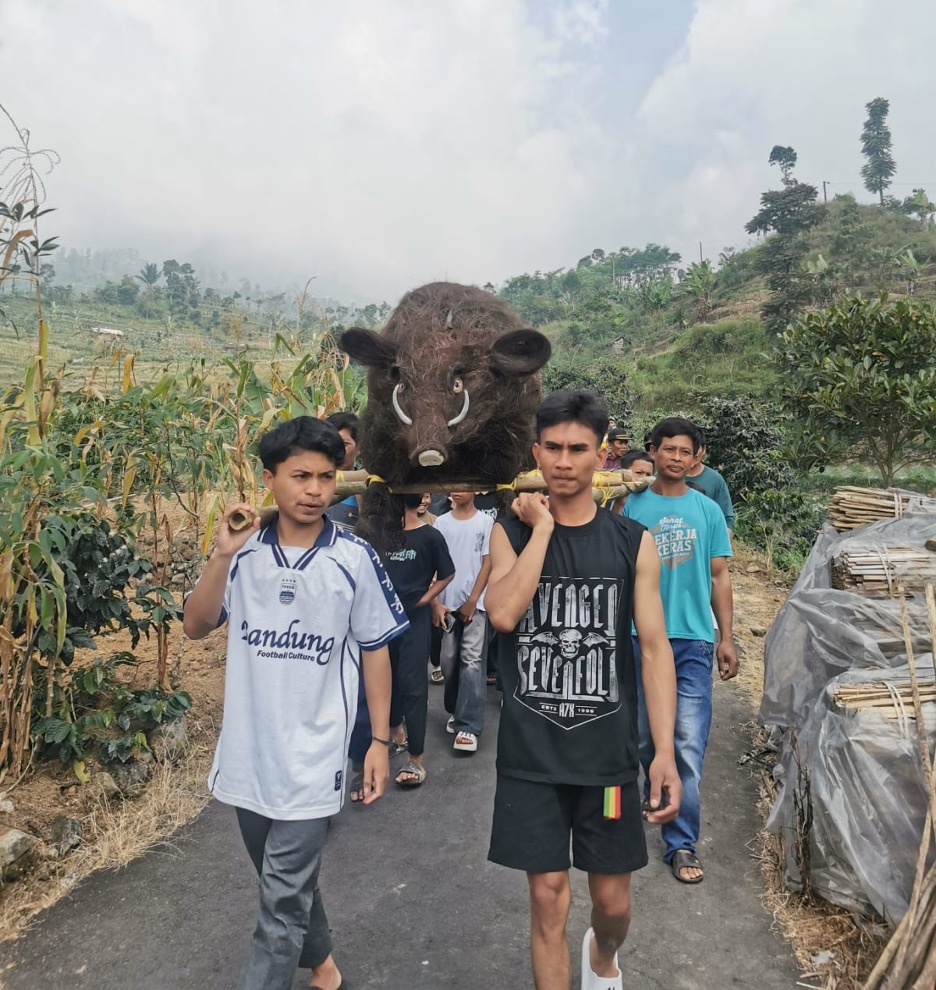 Kemongkong: Preserving the Boundary Between Farmland, Forest, and Wild Boars in Petungkriyono08 Jul 2026
 -
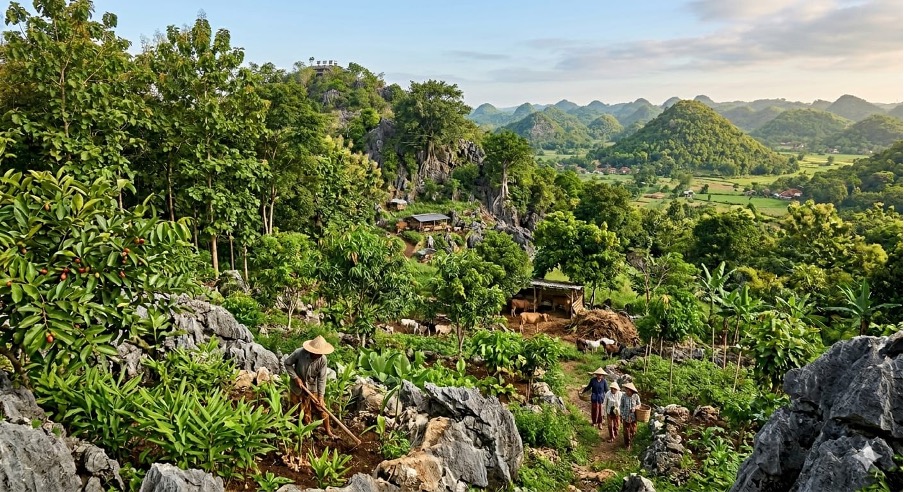 Agroforestry and Karst Carbon: The Hidden Climate Potential Beneath Limestone Mountains26 Jun 2026
 -
 Lessons from EWCF: Agroforestry and the Foundations of an Inclusive Rural Economy24 Jun 2026
 -
 BUMDes at a Crossroads17 Jun 2026
Category
- Ecosystem Restoration
- Biodiversity and Wildlife Conservation
- Community Ecological Education
- Digital Climate Action
- Climate Movement
- Knowledge Hub
- Sustainable Biodiversity-Based business
- Bioconversion and Bioprocessing-Based Business (4B)
- Sustainable Community-Based Tourism (SCBT)
- Integrated Agroforestry Initiatives
- Carbon Farming Initiative
- Basic service access and quality improvement for communities
- Livelihood Improvement Interventions
- Development of Social Networks and Cooperation
- Participatory Sustainable Livelihood Assesment
- Women's Empowerment Collective
Upcoming Events
Discussion: Disability and Social Inclusion
28
March
- Sleman, Yogyakarta
- 15.00 PM - 18.30 PM
Improving Facilitation Skills: Effective Techniques and Strategies
04
June
- Sleman, Yogyakarta
- 14.00 PM - 17.00 PM
Other Pages
Contact Info
- Omah Relung. Kalipentung RT03/RW17 Kalitirto Berbah Sleman Yogyakarta 55573.
- +62 851-7544-2708
- info@relung.or.id
Newsletter
Take care of the environment with Relung Indonesia Foundation! Get the latest information about forestry and the environment in Indonesia.
Relung Indonesia Foundation
Copyright © 2023. All rights reserved.