
Kemongkong: Preserving the Boundary Between Farmland, Forest, and Wild Boars in Petungkriyono
admin
July 8, 2026
Knowledge Hub
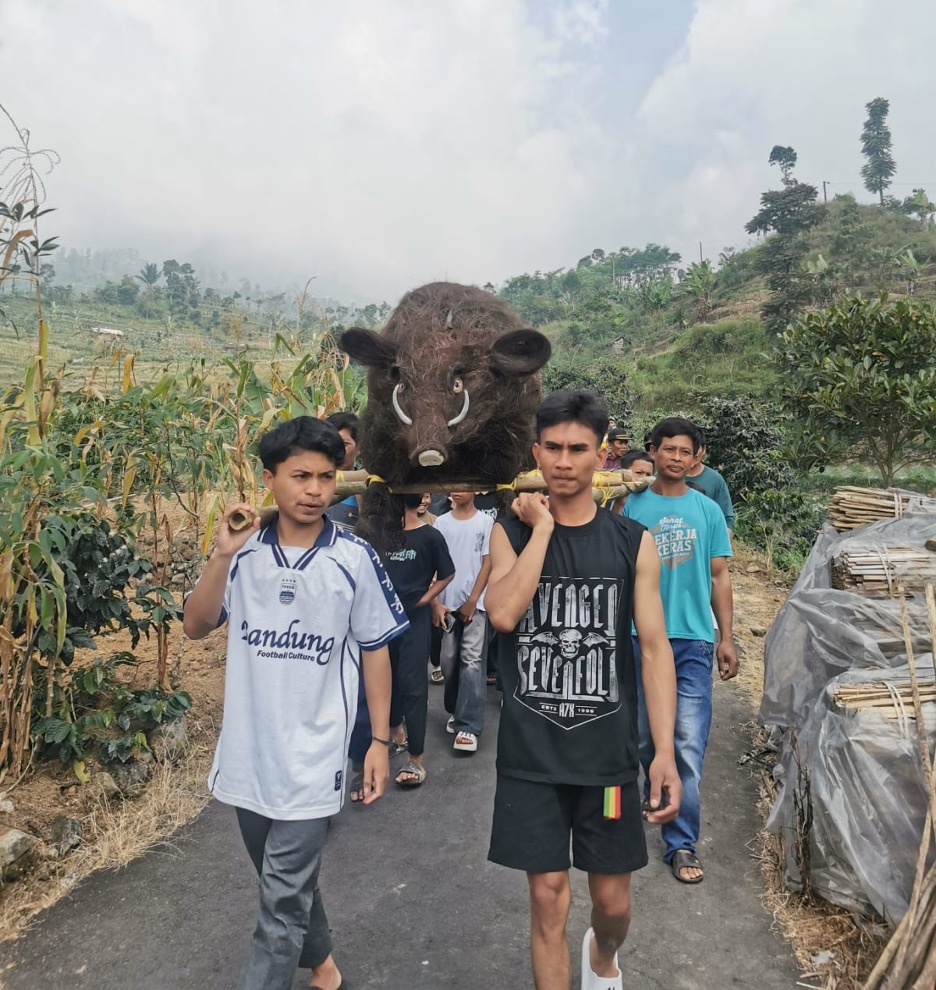
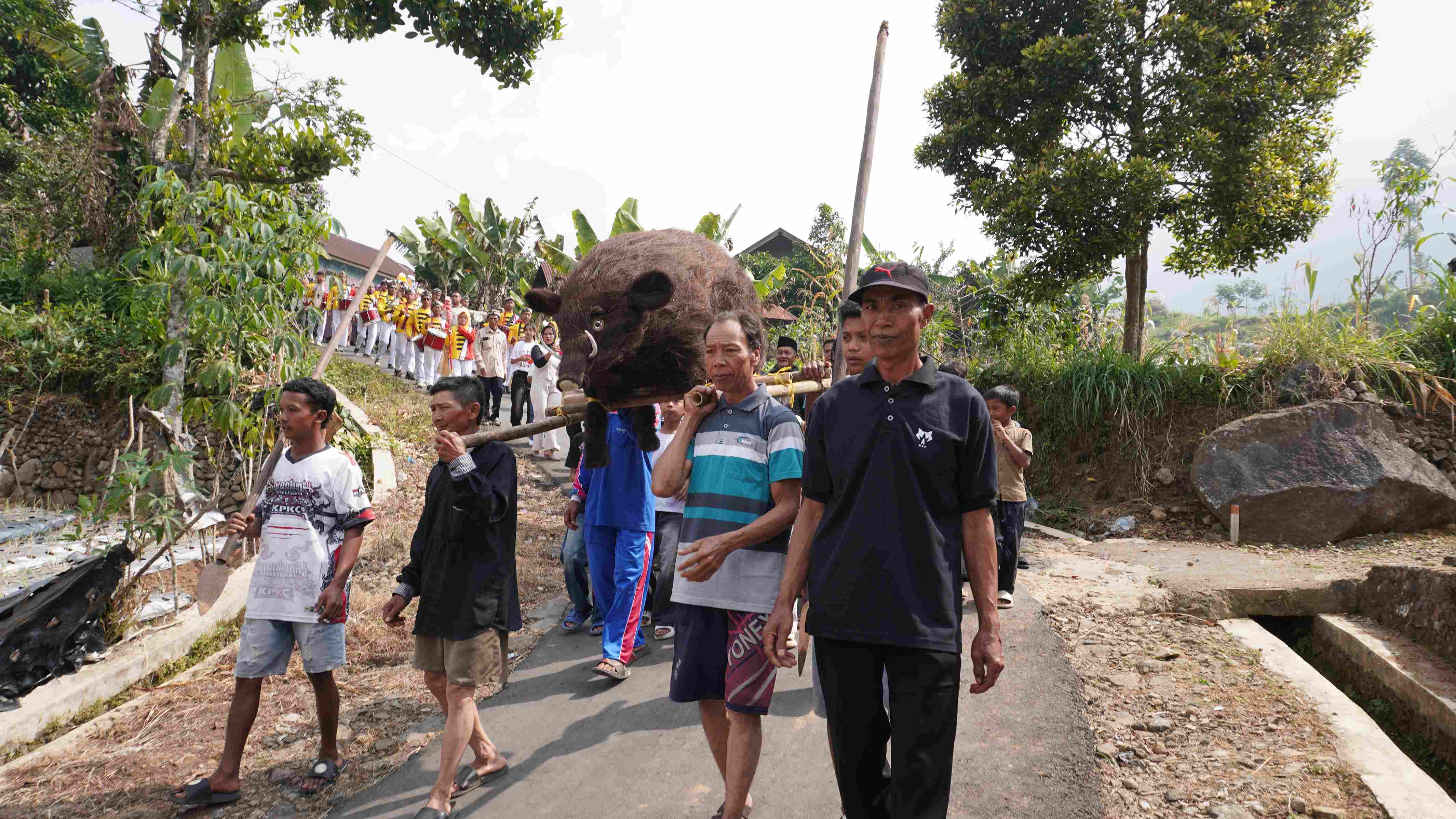
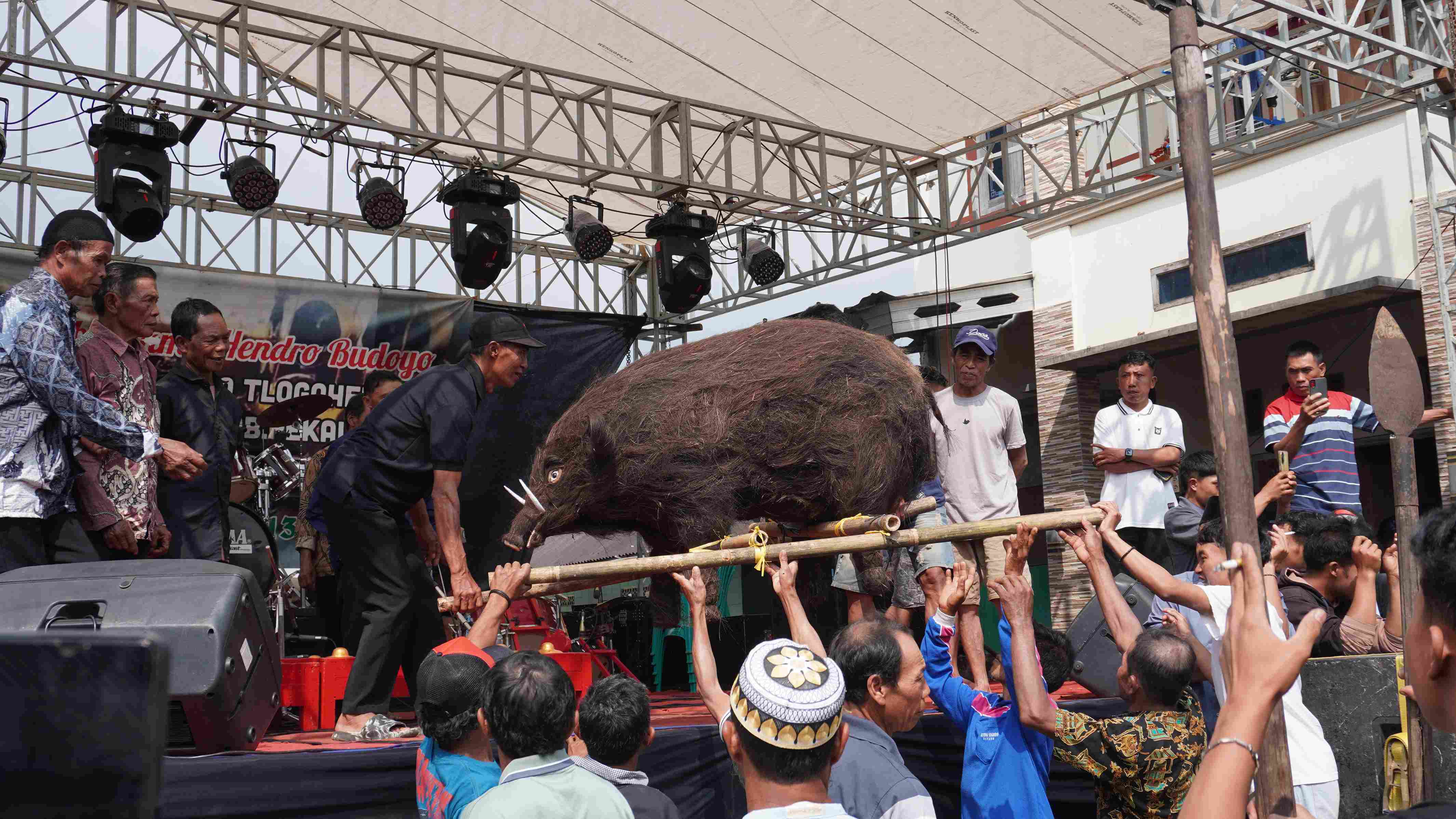
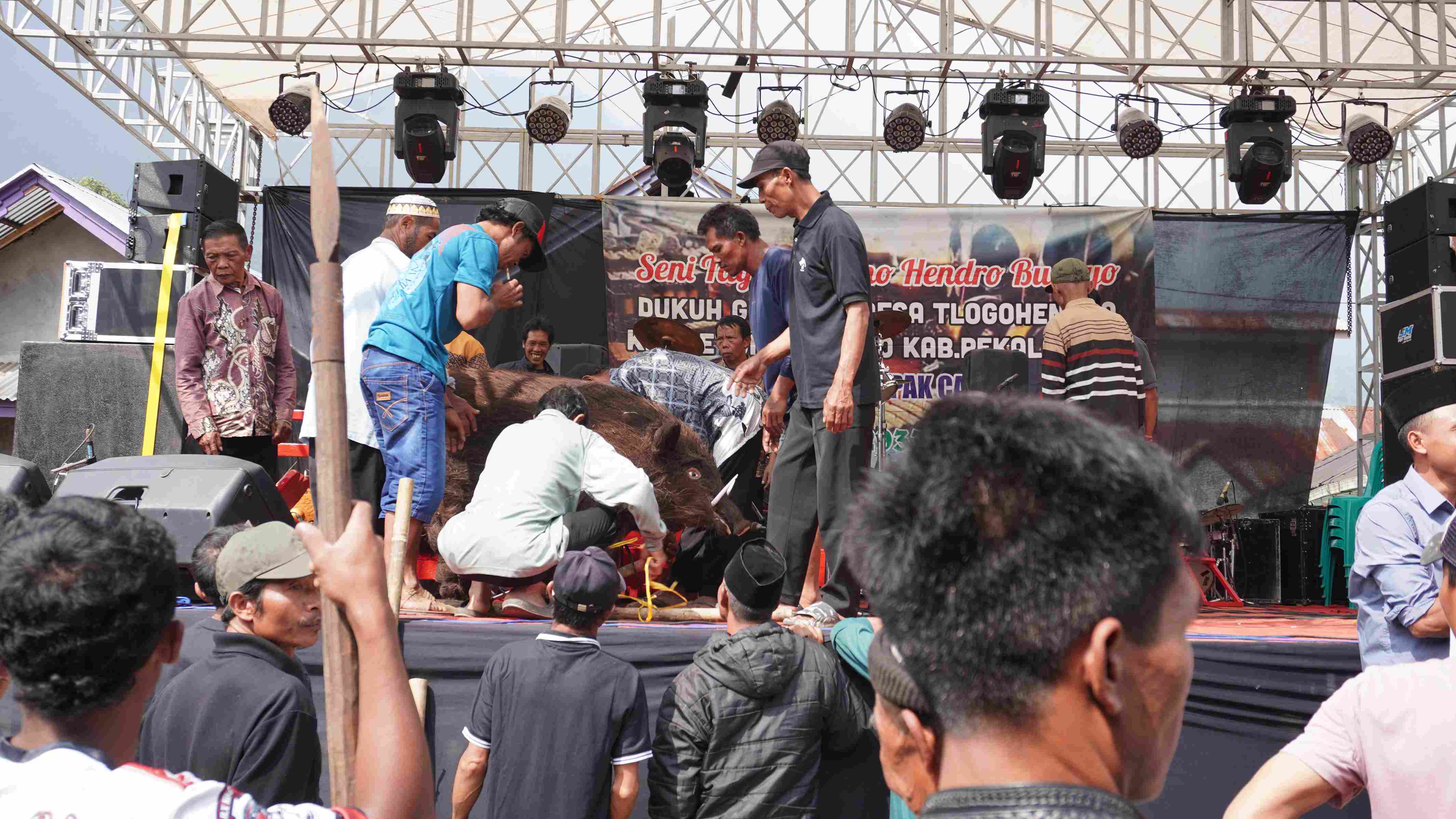
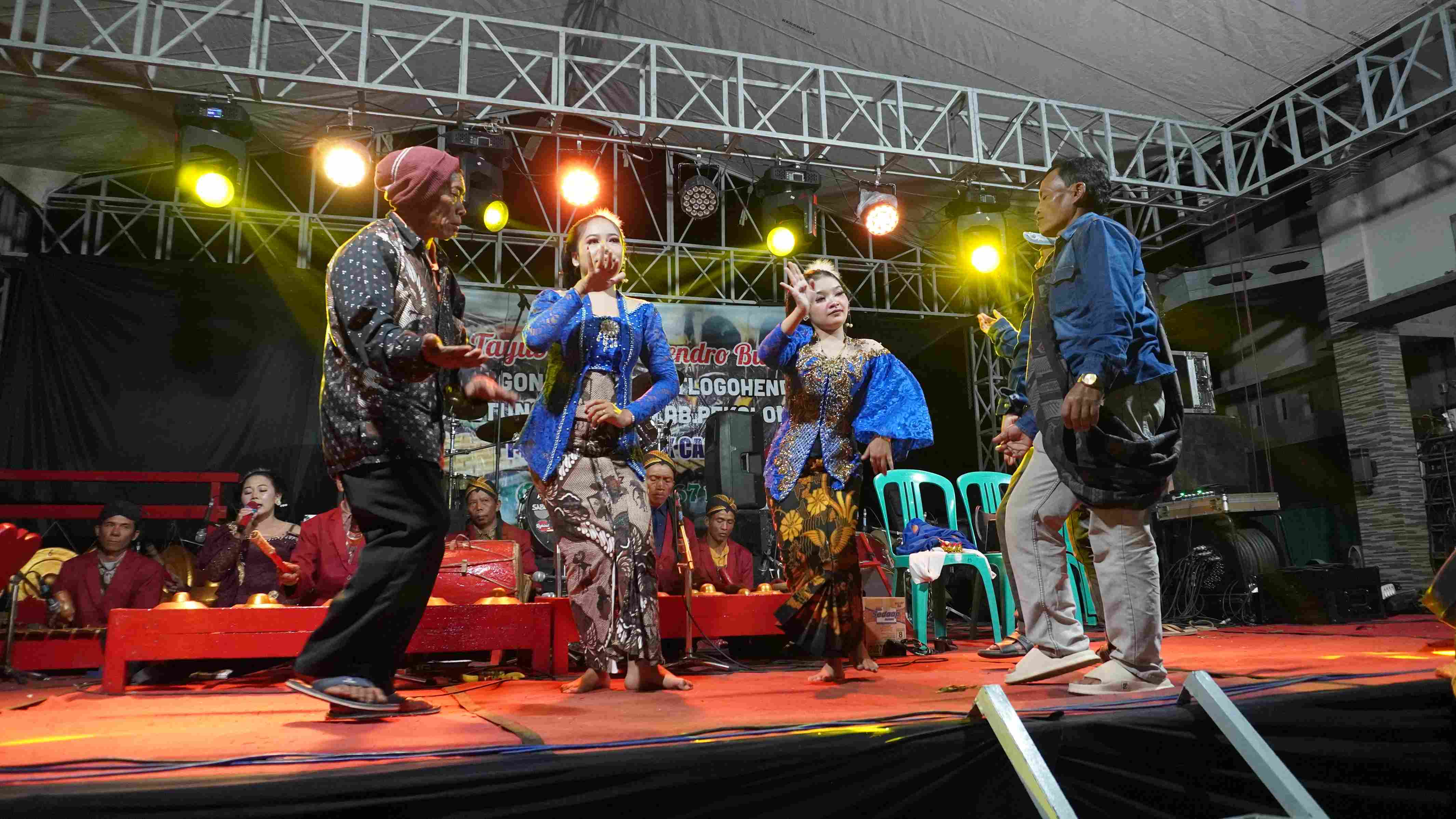
On 6 July 2026, Petungkriyono once again showcased a cultural tradition that reflects the complex relationship between people and nature. Held in Tlohgohendro Village, the event began with a kenduri (communal thanksgiving feast), followed by a procession featuring a wild boar effigy made from ijuk (sugar palm fiber), and concluded with the traditional Ronggeng Kemongkong performance in the evening.
At first glance, the celebration may appear to be an ordinary cultural festival, complete with processions, performances, and community gatherings. Yet beneath these festivities lies a deeper story about how the people of Petungkriyono understand the relationship between humans, forests, farmland, and wildlife.
In modern conservation discourse, the relationship between people and nature is often portrayed in overly simplistic terms: humans are seen as the source of disturbance, while nature is viewed as a realm that must remain untouched by human intervention. For communities living alongside forests, however, this relationship has never been that simple. Nature is not something distant—it exists around their homes, along footpaths, in agricultural fields, rivers, forests, and within their collective cultural memory.
It is within this context that the figure of the Kemongkong becomes significant.
Traditionally, a Kemongkong is recognized as a wild boar handler. In the cultural traditions of Petungkriyono, however, the role extends far beyond practical expertise in dealing with wild boars. The Kemongkong serves as a ritual authority who mediates the relationship between humans and wild boars. Positioned at the boundary between village and forest, farmland and wildlife, the Kemongkong embodies the balance between protecting crops and acknowledging the power and rightful place of nature.
For farming communities, wild boars can indeed pose a serious threat. When they enter cultivated fields, they damage crops and reduce harvest yields. Yet in the cultural memory of Petungkriyono, wild boars are not merely considered agricultural pests. They are also respected as powerful, intelligent, and courageous creatures of the forest that possess their own rightful place in the landscape. Their presence serves as a reminder that human farmland has always existed alongside the habitats of other living beings.
Consequently, the community’s response to wild boars has never been purely practical. It is also social, symbolic, and ritualistic. Historically, gedhig referred to a communal wild boar hunt led by the Kemongkong and involving villagers, while bedhag described smaller-scale hunts conducted by specific groups of hunters. Both practices reflected that interactions with wild boars were never solely about killing or driving them away—they also embodied courage, customary rules, legitimate authority, and humanity’s place within nature.
The Ronggeng Kemongkong dance occupies a special position within this cultural framework. Anthropological records from Petungkriyono indicate that the dance traditionally marked the completion of a Kemongkong’s initiation. It was therefore not simply an evening performance but an important ritual that formally recognized an individual’s role in mediating the relationship between the community and wild boars.
When Ronggeng Kemongkong was performed again on 6 July 2026, it represented far more than a cultural performance—it revived the community’s collective memory. The kenduri symbolized gratitude and togetherness. The procession of the wild boar effigy reintroduced the symbolic presence of wildlife into the community’s social space. The evening dance created a meeting point between performing arts, ritual, cultural identity, and shared memory.
The wild boar effigy itself carries powerful symbolism. Although it is not a real animal, its presence vividly recalls the longstanding relationship between people and wildlife. Crafted from natural palm fiber, the figure transforms natural materials into a cultural symbol—one that reminds the community that forests, farmland, and wildlife continue to exist not only in the landscape but also in the cultural memory of Petungkriyono.
This is where the concept of dynamic harmony between humans and nature finds its clearest expression. Harmony does not necessarily mean the absence of conflict, nor does it imply that people and nature always coexist peacefully. In Petungkriyono, harmony evolves through tension: when wild boars enter cultivated fields, when agriculture expands near forests, when communities strive to protect their crops while continuing to uphold rituals and traditional values that acknowledge the place of wildlife.
The Kemongkong symbolizes this dynamic form of harmony. It reminds us that relationships with nature cannot be built solely through control and domination. There are boundaries that must be respected, customs that must be preserved, and cultural languages through which communities understand wildlife—not merely as a nuisance, but as an integral part of the broader landscape of life.
Naturally, times have changed. Roads have expanded, younger generations have different experiences, and traditional practices no longer exist in exactly the same form. Wild boar hunting itself should not simply be viewed through the lens of the past. Today, what matters most is not reviving the practice of hunting, but understanding the cultural wisdom embodied by the Kemongkong tradition.
At its heart, that wisdom is about boundaries.
The boundary between forest and farmland.
The boundary between human needs and wildlife habitats.
The boundary between courage and recklessness.
The boundary between utilizing nature and respecting it.
For conservation efforts, the story of the Kemongkong offers an important lesson. Conservation cannot focus solely on forests, wildlife, or the size of protected areas. It must also recognize how communities perceive and give meaning to the landscapes in which they live. In Petungkriyono, forests are not merely ecosystems—they are also cultural spaces. Farmland is not simply a place of production—it is where humans encounter other living beings. Wild boars are not merely wildlife—they are part of the community’s social history and cultural identity.
From this perspective, Ronggeng Kemongkong can be understood as an effort to preserve ecological memory. It reminds us that communities possess their own ways of understanding and responding to tensions with nature. These perspectives may differ from the language of modern conservation, yet they share the same fundamental awareness: humans do not live alone.
The relationship between humans and nature continually evolves, shaped by changing roads, agricultural practices, economies, generations, and worldviews. As long as traditions such as the Kemongkong continue to be remembered, celebrated, and reflected upon, there remains hope for creating new and wiser forms of coexistence.
The Ronggeng Kemongkong celebration on 6 July 2026 was therefore more than a reenactment of the past. It was an invitation to see Petungkriyono as a living landscape where people, forests, farmland, wildlife, rituals, and memory remain deeply interconnected.
There, harmony is never a finished state.
Harmony is an ongoing process.
And the Kemongkong is one of the ways Petungkriyono remembers—and continues to nurture—that living process.
Contributors:
Meiardhy Mujianto
“Dynamic Harmony between Human and Nature.”
-Relung Indonesia
Tags :
Knowledge Hub
Share This :
Category
- Ecosystem Restoration
- Biodiversity and Wildlife Conservation
- Community Ecological Education
- Digital Climate Action
- Climate Movement
- Knowledge Hub
- Sustainable Biodiversity-Based business
- Bioconversion and Bioprocessing-Based Business (4B)
- Sustainable Community-Based Tourism (SCBT)
- Integrated Agroforestry Initiatives
- Carbon Farming Initiative
- Basic service access and quality improvement for communities
- Livelihood Improvement Interventions
- Development of Social Networks and Cooperation
- Participatory Sustainable Livelihood Assesment
- Women's Empowerment Collective
- News
Upcoming Events
Discussion: Disability and Social Inclusion
28
March
- Sleman, Yogyakarta
- 15.00 PM - 18.30 PM
Improving Facilitation Skills: Effective Techniques and Strategies
04
June
- Sleman, Yogyakarta
- 14.00 PM - 17.00 PM
Other Pages
Contact Info
- Omah Relung. Kalipentung RT03/RW17 Kalitirto Berbah Sleman Yogyakarta 55573.
- +62 851-7544-2708
- info@relung.or.id
Newsletter
Take care of the environment with Relung Indonesia Foundation! Get the latest information about forestry and the environment in Indonesia.
Relung Indonesia Foundation
Copyright © 2023. All rights reserved.