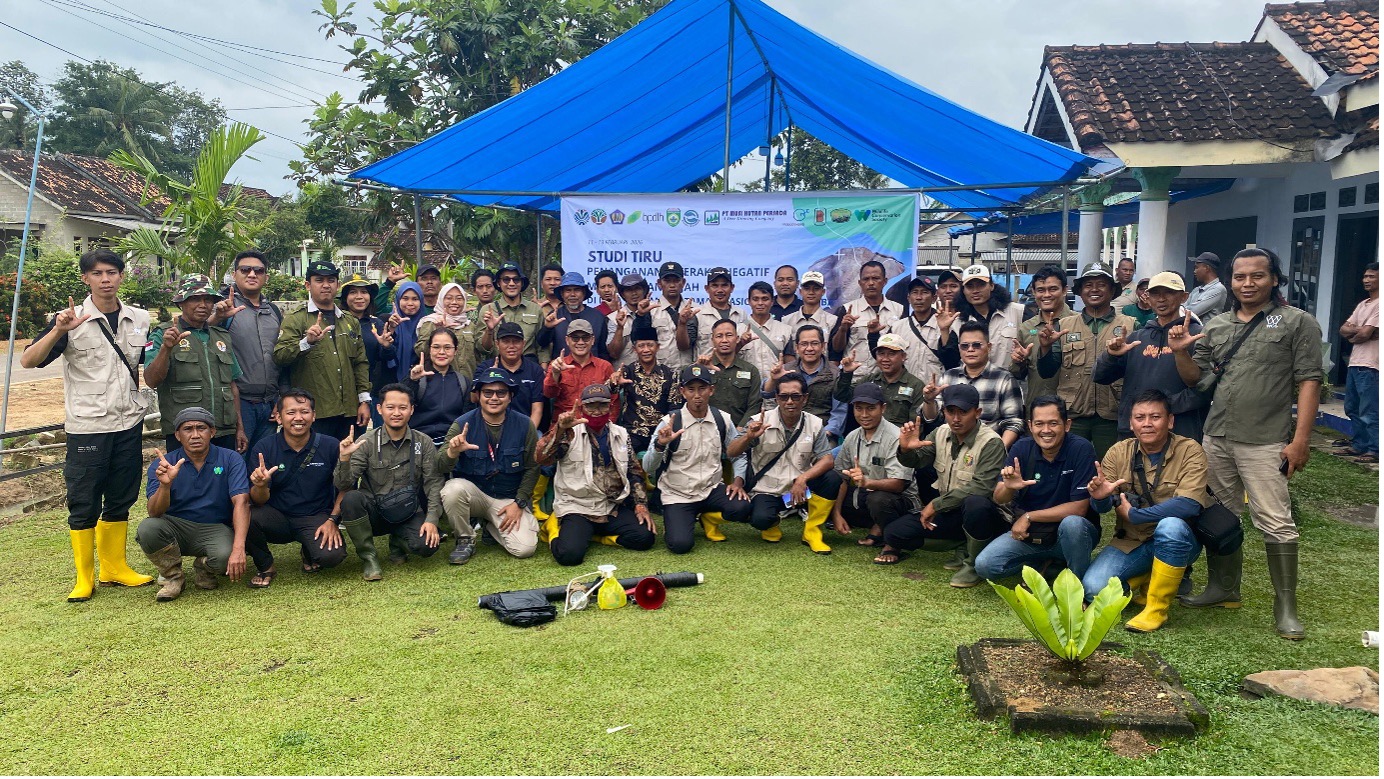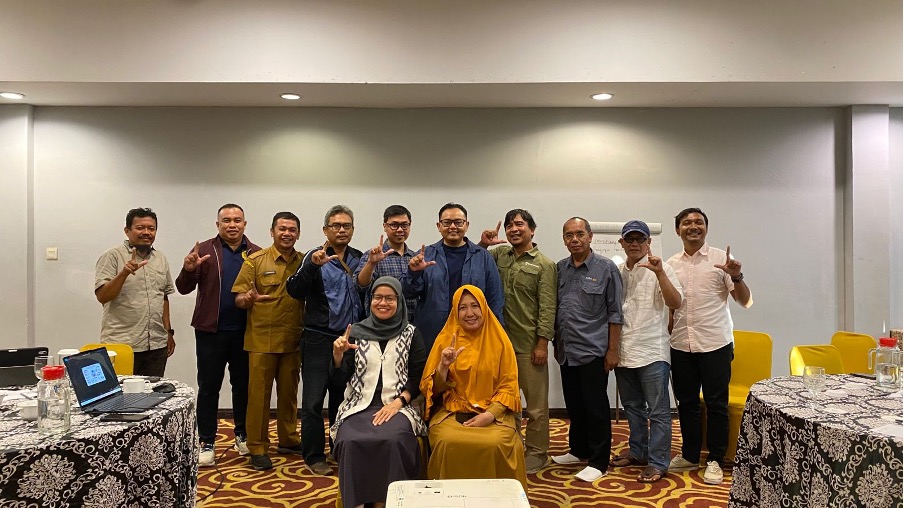
On Monday and Tuesday, May 4–5, 2024, representatives from the Provincial Government, vertical agencies of the central government, and civil society organizations (CSOs) in West Kalimantan gathered to discuss a highly important issue: the development of the palm oil industry, food sovereignty, ecosystem restoration, and climate mitigation.
The discussion on the first day was immediately energized by a statement from Mr. Budi, Head of the Economic Division of the West Kalimantan Regional Development Planning Agency (Baperida):
“From now on, we must begin discussing food sovereignty, not merely food security. Food security is relatively easy—as long as we have money, we can buy food. But sovereignty is different.”
He further explained that the essence of food sovereignty lies not merely in the ability to “provide” food, but in the capacity to produce it independently.
Palm oil-producing regions such as West Kalimantan may indeed be considered “food secure” because palm oil farmers are still able to purchase rice and other food commodities even without maintaining food-production areas of their own. However, in the context of food sovereignty, such regions can actually be regarded as vulnerable because they lack independent food-production systems and remain dependent on other regions or external actors.
Why is the distinction between food security and food sovereignty important? And what does it have to do with West Kalimantan?
At present, the Relung Indonesia Foundation, the Provincial Government of West Kalimantan, and various stakeholders—including CSOs and academics—are developing an Integrated Landscape Management approach based on a sustainable palm oil industry that supports food security, environmental restoration, biodiversity conservation, and meaningful reductions in greenhouse gas (GHG) emissions.
This initiative, titled FOLUR (Food Systems, Land Use, and Restoration), is funded through the Global Environment Facility (GEF), technically supported by UNDP, and coordinated with several ministries, including the Coordinating Ministry for Food Affairs, Bappenas, the Ministry of Agriculture, and the Ministry of Forestry.
During the discussions that day—particularly in Focus Group Discussion (FGD) Session II, which I happened to facilitate—several major issues surrounding the expansion of the palm oil industry in West Kalimantan emerged. The theme of the session was Building an Inclusive and Equitable Palm Oil Industry.
Competition between palm oil plantations and food production became one of the central concerns, as oil palm expansion has reportedly converted vast areas of food-producing land. One participant, Mr. Agus, stated that approximately 80,000 hectares of designated rice fields (Lahan Baku Sawah / LBS) had been converted, most of them presumably into oil palm plantations.
In addition, West Kalimantan still has around 80,000–90,000 hectares of upland rice cultivation areas that continue to make a real contribution to local food production.
“Unfortunately, the Central Statistics Agency (BPS) does not include these areas in regional statistics,”
explained Mr. Agus.
More concerningly, these upland rice areas are also shrinking every year due to conversion into oil palm plantations.
“Even citrus cultivation areas in Sambas are increasingly being converted into palm oil plantations,”
Mr. Agus added.
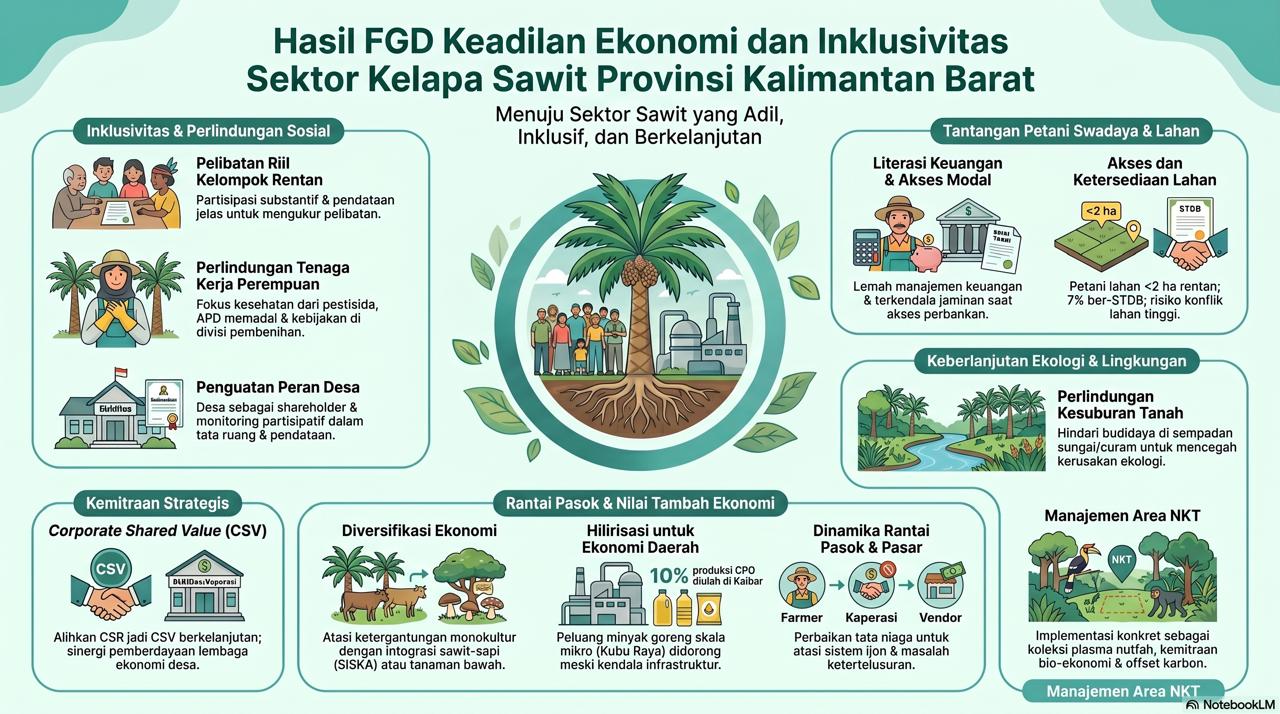
Beyond the competition between food production and palm oil cultivation, many other issues emerged from the perspective of inclusivity and justice, including:
- The absence of substantive participation and serious attention toward vulnerable groups—including persons with disabilities, Indigenous communities, women, and children—in the development of the palm oil industry.
- Low levels of financial literacy among palm oil farmers.
- Declining soil fertility.
- The degradation of biodiversity.
- Economic vulnerability among farmers, especially independent smallholders managing less than four hectares of oil palm plantations.
- Minimal added-value contribution to the regional economy. Discussions revealed that only around 10% of the crude palm oil (CPO) produced in West Kalimantan is processed locally, while the remaining 90% is shipped outside the province as raw material.
- Persistent conflicts between companies and surrounding communities.
- Inequality between the scale of smallholder plantations and private/state-owned plantations. Records indicate that community-owned plantations in West Kalimantan cover approximately 600,000 hectares, while private and state-owned plantations span around 2.2 million hectares.
- Weak product legality due to weak plantation legality; only around 7% of smallholder plantation areas possess STDB (Surat Tanda Daftar Budidaya / Plantation Registration Certificates).
- Ongoing problems related to supply chains and product traceability.
Based on their assessment of the current condition of palm oil development, participants proposed several recommendations for building a more inclusive and equitable palm oil industry in West Kalimantan. The proposed measures included:
- Building equal participation and access for vulnerable groups within palm oil governance systems.
- Strengthening the financial resilience of palm oil farmers and laborers through financial literacy programs and community-based savings movements.
- Maintaining soil productivity and fertility through the implementation of Good Agricultural Practices (GAP), including balanced fertilization, more natural farming methods, integration with livestock systems, and the use of legume cover crops.
- Preserving ecological balance, social wellbeing, and community welfare through the management of High Conservation Value Areas (ANKT) within oil palm cultivation zones.
- Strengthening the economic resilience of vulnerable smallholders, particularly those managing less than two hectares, through diversified livelihoods such as food-crop integration, livestock development, and income-generation opportunities for women farmers.
- Increasing regional income and employment opportunities through palm oil downstreaming and industrial processing. This was identified as a strategic agenda requiring strong coordination and negotiation with the central government due to the need for adequate industrial infrastructure.
- Building more equal and mutually beneficial relationships between companies and communities through the development of Corporate Shared Value (CSV). This approach seeks to create reciprocal partnerships in which some company needs—such as water supply, food provision for workers, and operational road maintenance—can be collaboratively managed with surrounding communities. This differs fundamentally from Corporate Social Responsibility (CSR), which is often limited to charitable activities.
- Protecting community livelihood spaces through adequate allocation of agricultural and plantation areas for local communities.
- Ensuring the legality of smallholder commodities through pro-farmer land administration policies.
- Protecting productive food-production areas through the enforcement of Sustainable Food Agricultural Land (LP2B) policies, as well as incentive systems and mechanisms for food farmers.
- Improving palm oil trade governance to strengthen and guarantee product traceability, including through the reinforcement of village economic institutions such as cooperatives and village-owned enterprises (BUMDes).
These recommendations will continue to be collectively advocated for and integrated into the development of the Integrated Landscape Management document under the Food Systems, Land Use, and Restoration (FOLUR) program.
Contributor:
Akhmad Arief Fahmi